ENGLISH SPEAKER’S GUIDE
PRACTICAL GUIDES FOR ENGLISH-SPEAKING BUSINESSES WORKING WITH SPANISH AND PORTUGUESE DOCUMENTS

Why a Word-for-Word Translation Will Let Your Marketing Down
You can translate a contract literally and still be safe. You cannot do the same with marketing. The moment your message has to persuade, charm, or sell, a faithful word-for-word translation stops being an asset and becomes a liability. If you are taking Spanish- or...

Translating Business Documents from Spanish or Portuguese: What English-Speaking Companies Need to Know
If your company works with partners, subsidiaries, suppliers, or regulators in the Spanish- or Portuguese-speaking world, sooner or later you will need their documents in English — or yours in their language. Annual reports, board minutes, internal policies, audit...

Getting a Spanish or Portuguese Contract Translated to English? What to Check Before You Rely On It
If you are about to sign, enforce, or rely on a contract that began life in Spanish or Portuguese, the translation in front of you is doing more work than you might think. A single misread clause can shift liability, change a deadline, or quietly hand the other party...
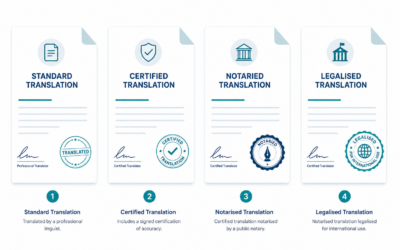
Translation, Certified Translation, Notarisation, Apostille: What’s the Difference and Which Do You Need?
If you've ever tried to get a Spanish or Portuguese document accepted by a UK authority, a court, or an overseas institution, you've probably come across these four terms and wondered what on earth the difference is. You're not alone — these terms are widely confused,...
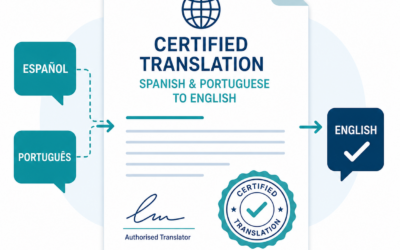
Do I Need a Certified Translation for My Spanish or Portuguese Document?
If you've received a Spanish or Portuguese document and need to submit it to a UK authority, a court, a bank, or a government body, you've probably asked yourself this question. The short answer is: it depends on who is asking for it and why. But don't worry — this...
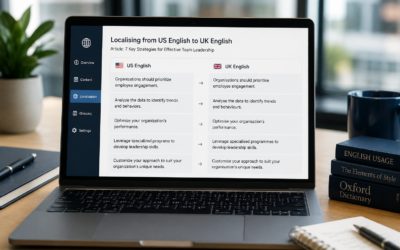
American English to British English: Why US Companies Entering the UK Need More Than a Spellcheck
Your copy is already in English, so localising it for Britain should be trivial — change a few zs to ss and you are done. That assumption is exactly why so much American content lands awkwardly with UK audiences. The differences run far deeper than spelling, and...
